Choosing the right crane services for your project can be a daunting task with several factors to consider. In this article, we will address the most common questions people have when selecting a crane service provider, ensuring that your project runs smoothly and efficiently.
How to Assess Crane Service Qualifications?
Checking Licensing and Certifications
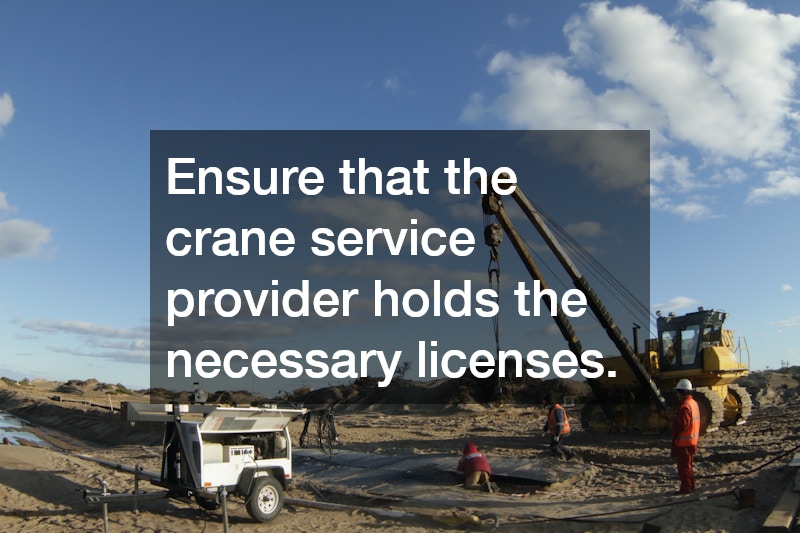
Ensure that the crane service provider holds the necessary licenses and certifications required by local and national authorities to guarantee compliance with regulations and safely operate cranes. This is crucial to prevent legal issues and ensure that all work is carried out following established safety standards.
Licensing often requires rigorous testing and adherence to specific safety guidelines, which are vital for any construction or industrial project. By confirming certifications, you gain confidence in the team’s technical expertise and their ability to handle complex machinery safely.
Such certifications reflect the provider’s commitment to safety and regulatory compliance, key tenets in any successful project. Licensed operators are trained to manage risks and execute tasks with precision, reducing the likelihood of project delays due to operator error.
Reviewing Experience and Expertise
Investigate the service provider’s experience and expertise in the industry, including their track record with similar projects, to evaluate their capability in handling your specific needs. A seasoned crane operator will understand the intricacies involved in different types of hoisting activities.
Reviewing the provider’s portfolio can give insight into their versed knowledge in both routine and unique lifting challenges. Projects that require specialized crane solutions can benefit significantly from a provider with a history of innovation and adaptability.
Evaluating past projects allows stakeholders to gauge the provider’s proficiency in maintaining timelines and adhering to safety standards. The more experience a provider has, the better equipped they are to foresee potential hurdles and rectify them proactively.
What Are the Costs Involved When Hiring Crane Services?
Understanding Price Structures
Learn how crane services are priced, including hourly rates, project-based pricing, and any additional fees for setup or overtime work, to better anticipate project costs. Pricing transparency is crucial for budget management and avoiding unexpected expenses.
Understanding these pricing dynamics helps you evaluate different providers beyond surface-level costs, considering factors like job complexity and duration. Enthusiastic involvement in preliminary discussions can unveil hidden fees that might surface during execution.
Estimating costs accurately aids in aligning project financials with organizational budgets, ensuring financial prudence. A detailed understanding of price structures safeguards against surprise expenditures that can escalate overall project spending.
Comparing Quotes from Multiple Providers
Gather estimates from several crane service providers to compare pricing and services offered, helping you to make a well-informed financial decision for your project. Price comparison is not merely about finding the lowest bid; it involves balancing cost with value and service quality.
Request detailed proposals to understand what is included in each quote, such as operator fees, insurance coverages, and machinery provision. Evaluating these aspects ensures you select a provider that aligns with both budgetary limitations and operational requirements.
Engaging multiple providers in conversation often yields insights into standard industry practices and fair pricing. Effective comparisons allow negotiations for better terms and packages tailored finely to the project scope and timelines.
Why is Choosing the Right Equipment Important?
Matching Equipment to Project Need
Identify the specific requirements of your project and match them with the correct type of cranes and accessories to optimize efficiency and safety. Selecting suitable equipment reduces operational risks and enhances efficiency.
Different cranes are designed for varied tasks, from lifting heavy building materials to delicate positioning of structural elements. Understanding the demands of your project prevents mismatched equipment choices that could hinder project flow.
Using the right crane also minimizes the wear-and-tear on machinery, increasing service life and reliability. A good match ensures that operational protocols are met, and potential hazards are minimized.
Evaluating Equipment Safety and Maintenance
Assess the condition and maintenance of the crane equipment to ensure that it is in peak operational state, minimizing the risk of accidents and equipment failure during the project. Regular maintenance records serve as a testament to the provider’s commitment to safety and reliability.
Failure to adequately maintain crane equipment can result in costly delays and increased safety risks. Documented maintenance schedules provide essential assurance of continual performance and safety under operational stresses.
An effectively maintained fleet indicates a discipline of care and readiness in service provision. Routine checks and servicing uphold machinery efficacy, contributing positively to project momentum and output reliability.
By carefully considering the qualifications, costs, and equipment of crane service providers, you can make more informed decisions that will contribute to the success of your project. Remember to prioritize safety, efficiency, and cost-effectiveness in your selection process to achieve the best results.